
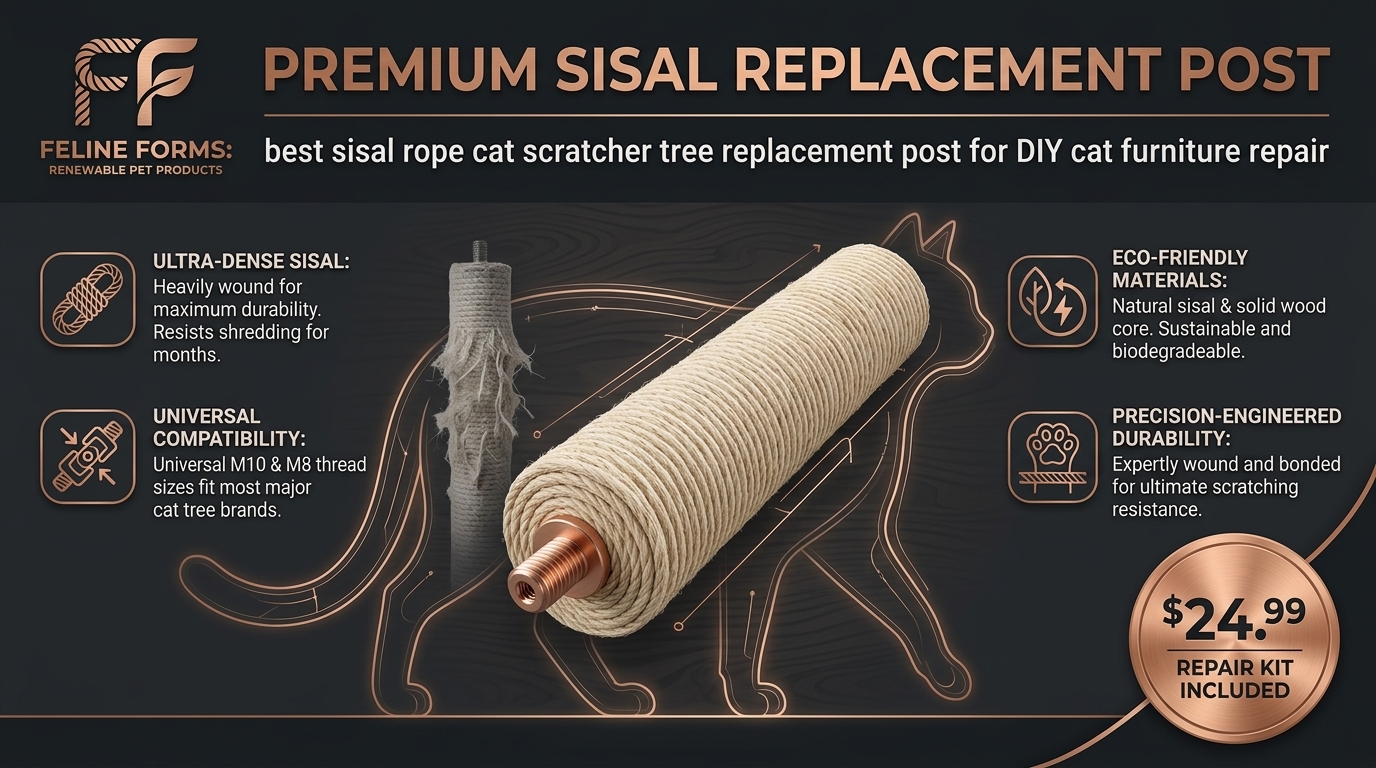

If you share your home with an indoor cat, you are likely familiar with the inevitable cycle of feline furniture wear and tear. Your cat’s scratching post starts out looking pristine—wrapped in tight, golden-brown natural fibers. Within months of enthusiastic daily scratching, stretching, and claw conditioning, the rope begins to fray, snap, and peel away, exposing the ugly cardboard or plastic core underneath.
The standard consumer reaction is often frustration. You look at the price tag of a brand-new multi-tier cat tree—often ranging from $100 to over $300—and realize you are expected to toss a massive structure into the landfill just because the scratching section is worn out.
Fortunately, there is a smarter, more sustainable, and dramatically more cost-effective solution: DIY cat furniture repair using the best sisal rope cat scratcher tree replacement post.
At bestpetstuff.com, we meticulously evaluate pet products to help pet parents across Texas, New York, California, Washington, and San Francisco curate an optimal environment for their animal companions while practicing smart home sustainability. Whether you live in a high-rise apartment in San Francisco or a sprawling suburban home in Texas, fixing your cat tree rather than replacing it saves money, reduces waste, and keeps your cat’s favorite scratching station intact. In this exhaustive, definitive guide, we will explore why natural sisal is the gold standard for cats, how to select the right replacement post or rope, and a step-by-step masterclass on executing a professional-grade DIY repair.
1. The Feline Psychology of Scratching: Why Sisal is Non-Negotiable
To understand why replacing a cat scratcher post with the correct material is vital, we must examine why cats scratch in the first place. Scratching is not a destructive behavioral flaw; it is a fundamental biological necessity.
- Claw Conditioning and Sheath Shedding: Cats shed the outer husks of their claws regularly to expose sharp new growth underneath. Rough, fibrous materials act as a natural emery board, pulling away old sheaths.
- Muscle Stretching and Toning: When a cat reaches up high onto a vertical post and digs their claws in, they pull their entire spine, shoulders, and front leg muscles into a deeply satisfying stretch.
- Scent Marking: Cats possess scent glands in their paw pads. As they scratch, they deposit invisible pheromones onto the fibers, marking the territory as their own secure domain.
Why Natural Sisal Beats All Other Fibers
Synthetic ropes like nylon, polypropylene, or cheap cotton fail miserably for cat scratching. Nylon is too slick, offering no grip, while cotton shreds into dangerous threads that can cause intestinal blockages if ingested.
Sisal rope—derived from the leaves of the Agave sisalana plant—is the undisputed king of feline scratching materials for several key reasons:
- Exceptional Tensile Strength: Sisal fibers are coarse, thick, and incredibly durable, able to withstand thousands of high-friction claw strikes.
- Ideal Grip Resistance: The rough texture catches feline claws just enough to allow satisfying shedding without trapping or snagging the claws.
- 100% Eco-Friendly and Non-Toxic: Because sisal is an all-natural plant fiber free of synthetic dyes or chemical treatments, it is completely safe for cats even if they nibble on stray fibers.
2. Anatomy of a Quality Cat Scratcher Replacement Post
When shopping for replacement posts or loose sisal rope to repair your cat furniture, evaluating structural integrity ensures your hard work lasts for years:
+-------------------------------------------------------------------------+
|                  SISAL REPLACEMENT POST ANATOMY                         |
+---------------------------+---------------------------------------------+
| Component                 | Function & Benefit                          |
+---------------------------+---------------------------------------------+
| Solid Wood or Heavy Paper | Provides a rigid, unyielding structural     |
| Tube Core                 | core that won't snap under heavy jumping.   |
+---------------------------+---------------------------------------------+
| 100% Natural Sisal Wrap   | Tight, dense industrial winding that resists|
|                           | premature fraying and claw slippage.        |
+---------------------------+---------------------------------------------+
| Metal Threaded Inserts    | Standardized M8 or 3/8-inch bolts embedded  |
| (Top & Bottom)            | securely into the core for easy screwing.   |
+---------------------------+---------------------------------------------+
3. Key Benefits of Repairing Instead of Replacing Cat Furniture
Opting for a DIY repair project using a replacement post offers profound advantages over buying new furniture:
- Massive Cost Savings: Buying a replacement post or a spool of sisal rope costs a fraction of a brand-new multi-tiered cat tree, saving you significant money over time.
- Reduces Landfill Waste: Millions of tons of pet furniture end up in landfills annually. Re-wrapping or swapping posts keeps bulky wooden structures out of the trash.
- Preserves Feline Familiarity: Cats are creatures of habit. Introducing an entirely new cat tree can cause stress and territorial anxiety. Repairing their existing, familiar tower preserves their scent and favorite resting spots.
- Customization and Sturdiness: Many commercial cat trees use flimsy cardboard tubes. When you DIY repair, you can upgrade to superior replacement posts with heavy-duty internal bracing.
4. Comparing Repair Methods: Pre-Made Replacement Posts vs. Re-Wrapping with Spools
When your cat tree needs attention, you have two primary DIY routes:
+-------------------------------------------------------------------------+
|                   REPAIR METHOD COMPARISON MATRIX                       |
+---------------------------+---------------------------------------------+
| Approach                  | Best Suited For & Advantages                |
+---------------------------+---------------------------------------------+
| Buying Pre-Made           | Quick, bolt-on replacement; ideal if your   |
| Replacement Posts         | cat tree uses standard screw-in posts.      |
+---------------------------+---------------------------------------------+
| Re-Wrapping with          | Best for custom shapes, platforms, or bases |
| Loose Sisal Rope Spools   | where standard screw-in posts won't fit.    |
+---------------------------+---------------------------------------------+
5. Step-by-Step Masterclass: How to Replace or Re-Wrap Your Cat Scratcher Post
Whether you purchased a pre-made replacement post or are re-wrapping an existing pole with fresh sisal rope, follow this professional step-by-step guide:
Phase 1: Disassembly and Preparation
- Dismantle the Cat Tree: Carefully unscrew the platforms and detach the worn-out scratching post from the base or upper tiers.
- Strip Old Material: Use utility scissors or a flathead screwdriver to pry away the shredded old rope, staples, or fabric remnants. Clean the bare wooden or cardboard core completely.
- Inspect the Core: Ensure the internal structure and threaded bolt inserts are still sturdy and free of mold or structural cracking.
Phase 2: Execution (Re-Wrapping or Installing)
- If Using a Pre-Made Replacement Post: Simply align the threaded bolts at the top and bottom of the new post with the mounting holes on your cat tree platforms and tighten securely using an Allen wrench.
- If Re-Wrapping with Loose Sisal Rope:
- Apply a heavy bead of non-toxic, odorless pet-safe wood glue or hot glue to the top of the cleaned post.
- Press the end of the sisal rope firmly into the adhesive and hold until secure.
- Wrap the rope tightly around the post, pulling firmly with every rotation to eliminate gaps. Push the rows tightly against one another.
- Every 3 to 4 rotations, add a small dot of glue to anchor the rope to the core.
- Once you reach the bottom, cut the rope cleanly, glue the final end down securely, and let the entire assembly dry for 24 hours before letting your cat inspect it.
6. Expert Tips for Maintenance and Longevity
To ensure your repaired cat scratching post withstands years of enthusiastic daily use, keep these professional pet-care tips in mind:
- Avoid Toxic Glues: Never use industrial super glues, epoxy resins, or chemical adhesives that emit strong VOC fumes. Cats have sensitive respiratory systems; stick to non-toxic wood glues or high-temp hot glue.
- Maintain Tight Tension: Loose rope unravels quickly under cat claws. Keep maximum tension on the rope as you wind it around the post.
- Rotate the Tree Position: If your cat tree sits in a corner where only one side gets scratched, rotate the entire tree every few months so wear distributes evenly across all sides of the post.
- Vacuum Sisal Regularly: Use a vacuum brush attachment weekly to remove shed claw fragments, dust, and trapped fur from the rope fibers.
7. Frequently Asked Questions (FAQs)
1. What makes natural sisal rope better than nylon or cotton for cat scratching posts?
Sisal offers the ideal coarse texture and high tensile strength for cats to condition their claws and shed old sheaths safely, whereas synthetic ropes are too slick or fray into dangerous strings.
2. How do I know what size replacement post to buy for my cat tree?
Measure the exact length (height) of the old post and check the diameter (usually 3 inches, 3.5 inches, or 4 inches) as well as the bolt thread size (commonly M8 or 3/8-inch) to ensure compatibility.
3. Can I use hot glue to wrap a cat scratching post with loose sisal rope?
Yes! High-temperature hot glue or non-toxic wood glue works exceptionally well to anchor sisal rope securely to wooden or cardboard post cores.
4. How long does a newly wrapped sisal scratching post typically last?
Depending on how many cats you have and their scratching intensity, a tightly wound, high-quality sisal post generally lasts anywhere from 1 to 3 years before needing attention.
5. Is it cheaper to repair a cat tree or buy a brand-new one?
Repairing your cat tree by purchasing a replacement post or a spool of sisal rope is vastly more cost-effective—often saving you 70% to 80% compared to buying a brand-new piece of furniture.
6. What should I do if my cat ignores the newly repaired scratching post?
Try rubbing a small pinch of organic catnip or silvervine powder onto the fresh sisal fibers, or gently guide their paws to scratch the texture to remind them it is their designated space.
7. Are pre-made replacement posts compatible with all brands of cat trees?
Most standard cat trees use universal M8 or 3/8-inch threaded bolts, but it is always best to measure your specific post diameter and bolt size before ordering.
8. Is sisal rope safe if my cat swallows small fibers?
Natural sisal is an organic plant fiber and small stray strands generally pass safely through a cat’s digestive tract, but you should trim loose frayed ends immediately to prevent long string ingestion.
9. Can I use sisal twine instead of thick sisal rope?
Thin sisal twine (under 4mm) wears out much too fast under cat claws and takes an eternity to wrap. Stick to thick sisal rope (ranging from 4mm to 6mm in diameter) for optimal durability.
10. Where can I find top-quality replacement posts, sisal rope, and cat furniture parts?
For carefully curated pet accessories, DIY repair supplies, and expert guides tailored to modern pet parents across the United States, look no further than bestpetstuff.com, where your cat’s happiness and sustainable pet care are our top priorities.
Conclusion: Restore Your Cat’s Favorite Playground Today
Maintaining a happy, healthy indoor cat environment doesn’t require constantly throwing away money on disposable furniture. By utilizing the best sisal rope cat scratcher tree replacement post for DIY cat furniture repair, you can easily restore your cat’s favorite tower to better-than-new condition while saving money and reducing environmental waste. From sturdy natural fibers to simple DIY installation, refreshing your cat’s scratching post creates a win-win for both you and your feline companion.


